Prolific Provenance
Luke 1_37
The post as published
Mary believed with joy.
Elizabeth's husband was in disbelief. Sara laughed in disbelief.
Yet...
All was fulfilled.
Inspiration and process
Dean, dictated after posting. Tidied by Claude at Dean's request: filler cut, his words kept, facts corrected.
This particular verse came from the John MacArthur New Testament reading plan. You read through the New Testament a portion at a time. If it's a short epistle, then you read the whole thing, and you read it over and over again for 30 days.
If it's a long gospel, then you read a certain portion of it, and then you read the next portion of it over the next 30 days, and so forth.
I'm going through Luke at the moment, and I've been doing a pretty terrible job at it. But Luke 1, verse 37, I came across.
And then the irony was that I have an app called Dwell. And about 2 days ago, Luke 1:37 was verse of the day. And it just stayed there for 2 days. So I went and had a look at what 1:37 was. The number 137 is easy to remember. It was when the angel of the Lord, Gabriel, goes and speaks to Mary and to Zacharias, Elizabeth's husband.
And then it got me thinking. It's like the New and the Old Testaments shadow each other. I distinctly remember the troubles and the challenges that Abraham and Sarah had trying to conceive. It would have been 25 years or so once the promise was made, and Abraham was 100 and Sarah 90.
They were quite old. The angel of the Lord came and spoke to Abraham, and Sarah is listening in, laughing, chuckling, thinking, I'm old. And then the angel confronts Sarah.
And it just got me thinking. We want to know how things are going to happen. When we do things, we believe in our own will, and we believe in our own ability, and we believe in our own planning.
Sometimes we have impossible goals, impossible objectives that we set because we want to stretch ourselves. We do the work, and we stretch, and we get there. And maybe there's a tiny element of luck. Or maybe something happens that's absolutely impossible. And if you're a non-believer, you go, yeah, that's fine, that was a miracle.
I remember being called out in my Bible study when I was asking for prayer. I said, I just need a little bit of luck. And Russell, the Connect leader, said, luck? Do you believe in luck?
And it really came down to, there is no such thing as luck if you believe, because there's a thing called providence, and He is sovereign. And so with all things, He, as in God, will make things happen. All things are possible with God.
And there have been so many times where people have talked about miracles, out of sickness, or certain things happening out of dire straits. And so I wanted to create something around this particular verse.
Now, as far as the creative is concerned, I use a particular style that I have. I've been using ChatGPT quite a bit. I gave the verse only, and it created this very cheesy anime image of an angel talking to Mary. They look young, and it looked like something out of a cartoon.
It doesn't know what good or bad is, or taste. It just did what it thought it would do based upon the data sets it had.
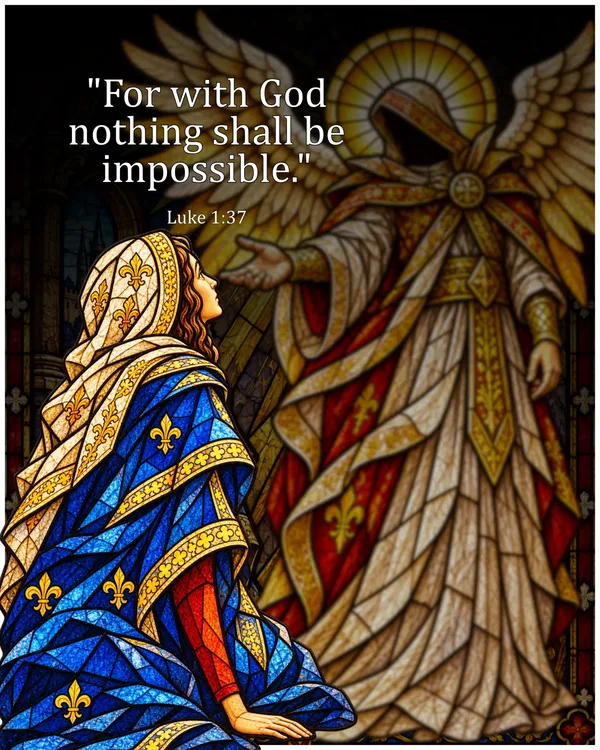
And so then I kept going back and forth in ChatGPT to try and edit it. As far as the angel's concerned, I don't want to see the face of the angel of the Lord. And then I thought of Tyrael from Diablo. What if I used a hooded angel and you couldn't see his face? And so that's where that came from.
And then I kept going back and forth. I don't like this particular style. I kept putting in things like, make the inking stronger, make it low poly, and this and that. And it just didn't work. And then eventually I thought, what if I just went with a stained-glass feel and look? And then it came out, and I was quite pleased with it.
But anything that comes out of AI can look a little bit flat. I wouldn't say the word polished, but it just looks very artificial. And so I had to ask for versions where I didn't have Mary, where I had the angel only, and then I had to layer it, and make things blurry, and I added in gradients and shadows.
And even when I upload an image and say, create this and this, it never comes out the way you want it to. And I think there's something to be said about that. The level of human artistry is important. It's the difference between just getting a raw output from a machine, as opposed to being able to manicure something and create a level of finish on top of it.
And so that's what this verse really was about.
The dictation, verbatim
I'm going to give you my process of inspiration.
So the first thing is that this post, this particular verse, I've been using the John MacArthur New Testament reading plan, which is basically you read you read through the New Testament, you read one of the, you know, a portion of the New Testament.
If it's a short epistle, then you'd read the whole thing, and you'd read it over and over again for like 30 days. And then if it's a long gospel, or then you would read a certain portion of it, and then you would read the next portion of it over the next 30 days and so forth.
And so I'm going through Luke at the moment, and I've been doing a pretty terrible job at it. But Luke 1, verse 37, I came across. And then the irony was that I have an app called Dwell. And about 2 days ago, verse 137 was verse of the day.
And it just stayed there for like 2 days, even though it was verse of the day.
And then so I went and had a look at what 137 was, and the irony is, like, the number 137 is easy to remember, and so it was basically when the angel of the Lord Gabriel goes and speaks to, obviously, Mary and Elizabeth.
And then it got me thinking, it's interesting, it's like the New and the Old Testaments shadow each other, and, you know, I distinctly remember, you know, the troubles and the challenges that Abraham and Sarah had, you know, trying to conceive.
And I distinctly remember when, you know, it would have been 10 years or so when once the promise was made, and both, you know, they were 100 years old. They were, so both Sarah and Abraham were quite old, and the angel of the Lord came, spoke to Abraham, Abram.
And then his name would be Abraham, and Sarah is obviously, you know, listening in and, you know, laughing, chuckling, thinking, you know, I'm old. And then the angel confronts Sarai. And it just got me thinking, it's like, we want to know how things are going to happen.
And when we do things, we believe in our own will, and we believe in our own ability, and we believe in our own planning.
And sometimes we have things like impossible goals, and sometimes we have things like impossible, you know, objectives that we set because we want to stretch ourselves, and we do the work and we stretch, and we get there. And maybe there's like a tiny element of luck.
Or maybe there's something that happens that's absolutely impossible. And if you're a non-believer, you go, yeah, that's fine. That's like, that was a miracle. And I remember being called out in my Bible study when I was talking to, when I was asking for prayer.
And I said, you know, I just need a little bit of luck. And Russell, the Connect leader, he basically said, luck. Do you believe in luck?
And it really kind of came down to, like, there is no such thing as luck if you believe, because there's a thing called providence, and he is sovereign. And so with all things, you know, he, as in God, will make things happen. All things are possible with God.
And there have been so many times where people have talked about miracles, you know, out of sickness, or, you know, certain things happening, you know, out of dire straits. And so I thought I wanted to create something around this particular verse.
Now, as far as the creative is concerned, I use a particular style that I have.
I've been using ChatGPT quite a bit, and I was saying, you know, create this image of, and I gave the verse only, and it then created this very cheesy anime image of an angel talking to Mary, and they look young, and it looked like something like out of a cartoon, but it doesn't know what good or bad is, or taste is.
It just did what it thought it would do based upon the data sets it had. And so then I kept going back and forth in ChatGPT to try and edit it. And then as far as the angel's concerned, I thought, I don't want to see the face of the angel of the Lord.
And then I thought of Tyrael from Diablo. And I thought, what if I used that, like, you know, a hooded angel and you couldn't see his face. And so that's where that came from. And then I kept going back and forth. And then I thought, I don't like this particular style.
And I kept, you know, putting in things like, you know, make the inking stronger, and, you know, make it low poly and this and that. And it just didn't work. And then eventually I thought, what if I just went with stained glass kind of feel and look?
And then it came out, and I was quite pleased with it. And then, but it just, anything that comes out of, AI can look a little bit flat, and can look a little bit, I wouldn't say the word polished, but it just looks very artificial.
And so I had to then ask for versions where I didn't have Mary, and then I had the angel only, and then I had to layer it, and I had to make things blurry, and I added in gradients and shadows and things like that. And then obviously it's through that work.
And even when I just upload an image and say, create this and this, like, it never comes out the way you want it to. And I think there's something to be said about that. The level of just human artistry around certain things is important.
It's the difference between doing something and just getting a raw output from a machine, as opposed to just being able to manicure something and create a level of finish on top of it. And so that's what this verse really was about.
How the image was made
Dean made the tile in ChatGPT over several rounds, then finished it by hand. In order:
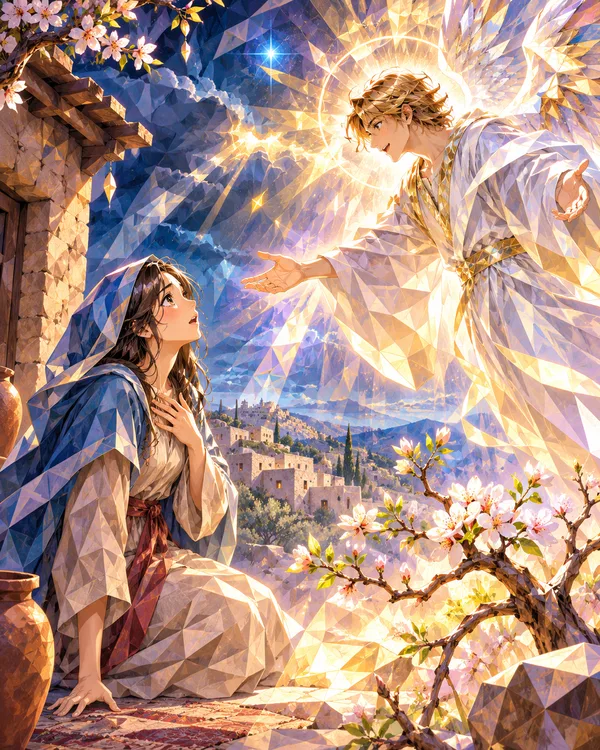
ChatGPTFirst renderFrom the verse alone. A young, cartoon-like angel and Mary. Not kept. 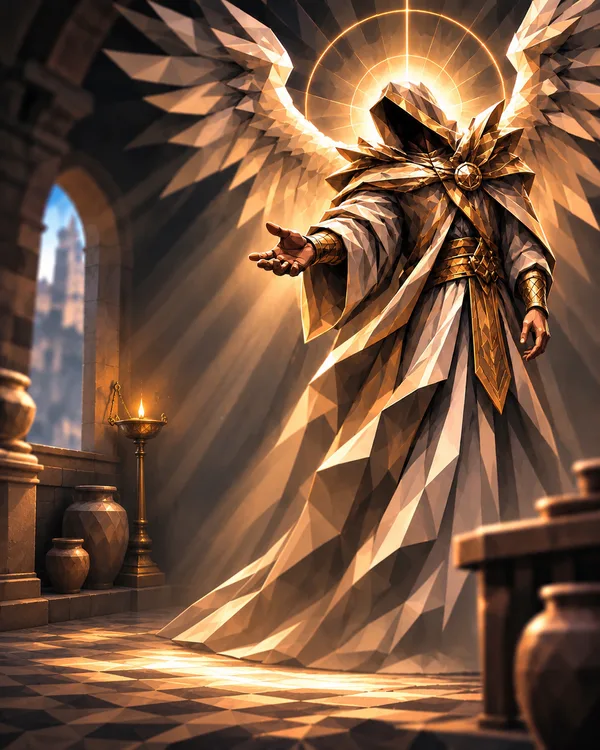
ChatGPTHooded angelNo face for the angel of the Lord: hooded, after Tyrael in Diablo. Low poly. 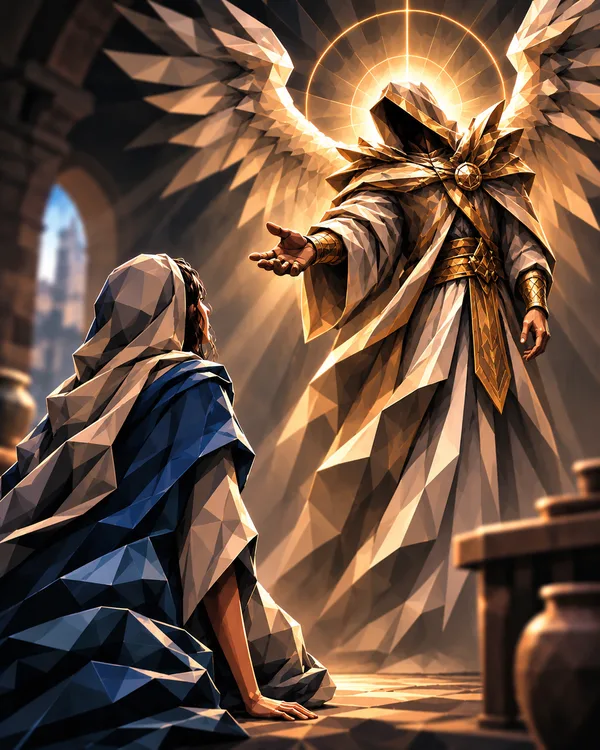
ChatGPTAngel and MaryMary kneeling, in the same low-poly style. 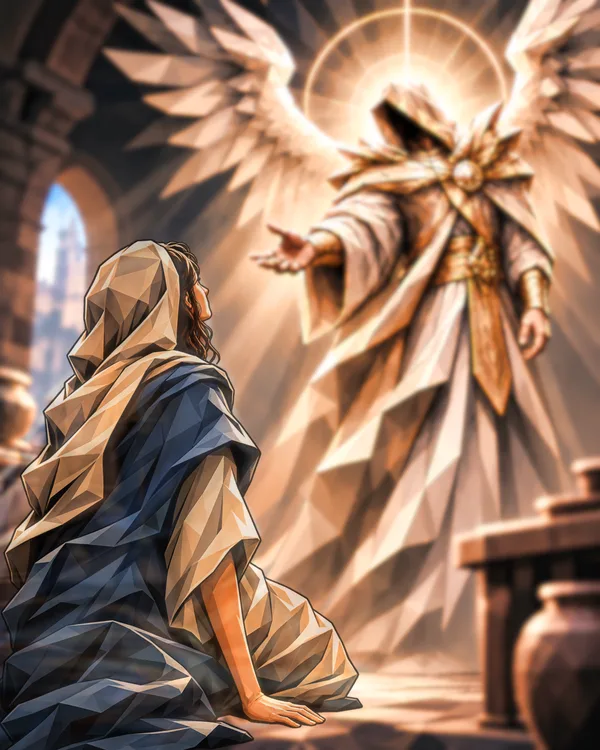
ChatGPTInking and lightStronger inking, warmer light, a blurred room. The style still didn't work. 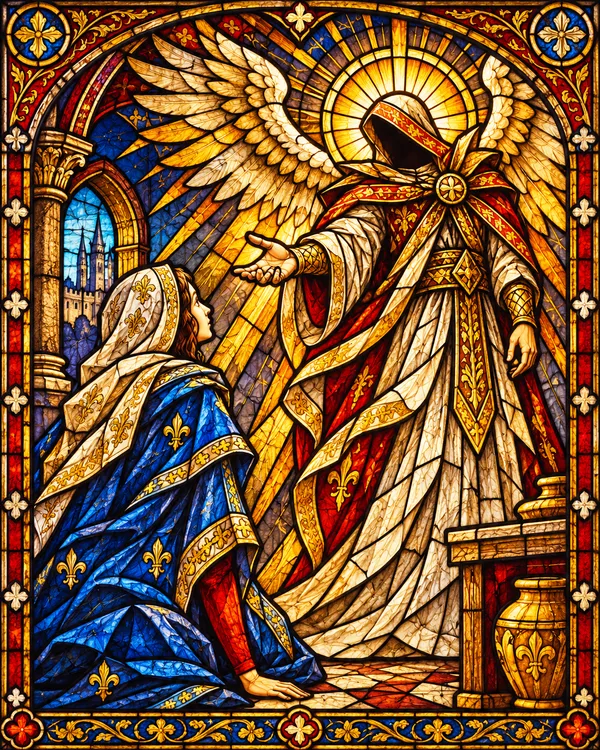
ChatGPTStained glassThe stained-glass Annunciation Dean was pleased with. 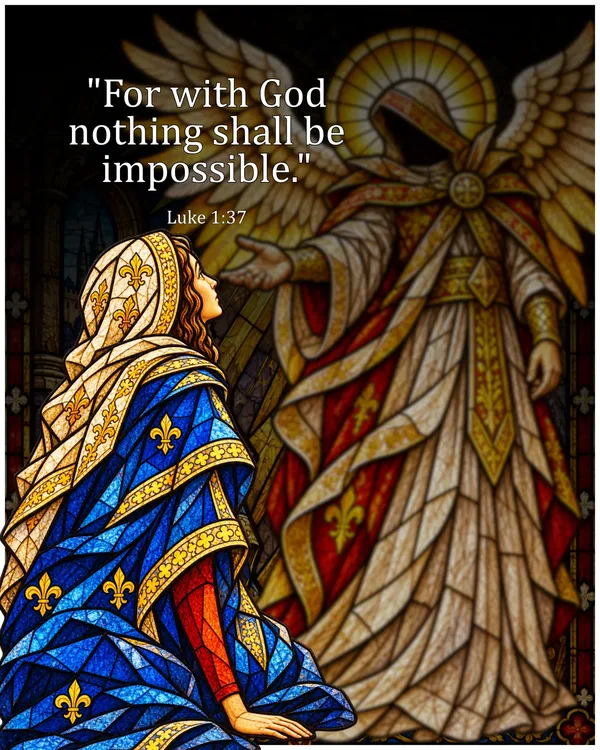
Dean, in CanvaFinal tileAngel and Mary generated separately and layered in Canva, the background blurred, gradients and shadows added, the verse set in type.


How the words were made
- Dean
- Claude
v1Raw dictation
688 characters · Voice dictation into Claude
Dean's concept and fact-check questions, 2026.11.08, speech-to-text, verbatim. Claude answered with a scripture check: Gabriel came to Zacharias, not Elizabeth, and he was the one who doubted.
Read this version
When Gabriel came to Mary, Mary asked questions and she leaned in, but she was also quite happy and ecstatic. Was Elizabeth the same? But did she also believe, or was she a little bit more... not so believing?
And then also finally, with Sarai, I believe she started laughing because she didn't believe, and then the angel said, no, but you were laughing. Is that correct?
The concept here is that the Lord makes impossible things happen with these women, and yet the difference is that, you know, one of these women believed that she was ecstatic, whereas Elizabeth and maybe Sarai were a little bit more pessimistic.
But the Lord can make things happen for anyone, and that's the point.
SHA-256 d10656c89ba5b241672fccd2529c8b6372e64adaae5cc3380e7403f55c453130 · exact text
v2Published
118 characters · AuthoredUp
Verbatim from AuthoredUp, 2026.11.08 19:41 AEDT. Written by Dean in AuthoredUp from the fact check; no Claude draft.
Read this version
Mary believed with joy.
Elizabeth's husband was in disbelief. Sara laughed in disbelief.
Yet...
All was fulfilled.
SHA-256 bc069ef6eaff271310a2ffc53044af99948f1c484f5af44924f2d162a4afedca · exact text
Draft to published
Added
- Every published line. Yet... All was fulfilled. is the turn the dictation called the Lord can make things happen for anyone
Cut
- The fact-check questions, and Elizabeth as a doubter (the fact check moved the doubt to her husband)
Reworded
- SaraiSara (the KJV New Testament spelling, Hebrews 11:11)
- happy and ecstaticbelieved with joy
A scripture post with almost no copy: Dean let the tile carry the verse and cut the story to three people and one turn, Yet... All was fulfilled.
AI involvement
No lines originated by AI.
Claude (claude-opus-5-5): Alt text, scripture fact check, post-publish workflow, record.
Sources
Check it yourself
Each version above carries a SHA-256 fingerprint of its exact text. Download the published text, hash it, and it matches this one:
bc069ef6eaff271310a2ffc53044af99948f1c484f5af44924f2d162a4afedca
Machine-readable record: this page carries schema.org data listing every version, who wrote it and when.